01/12/2026

12/01/2026
January 12, 2026
13/01/2026
January 13, 2026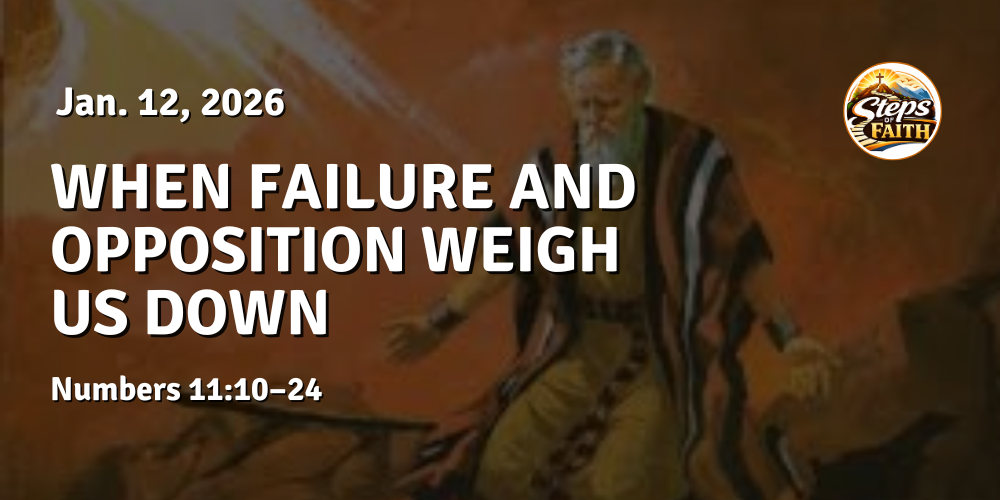
Monday | January 12
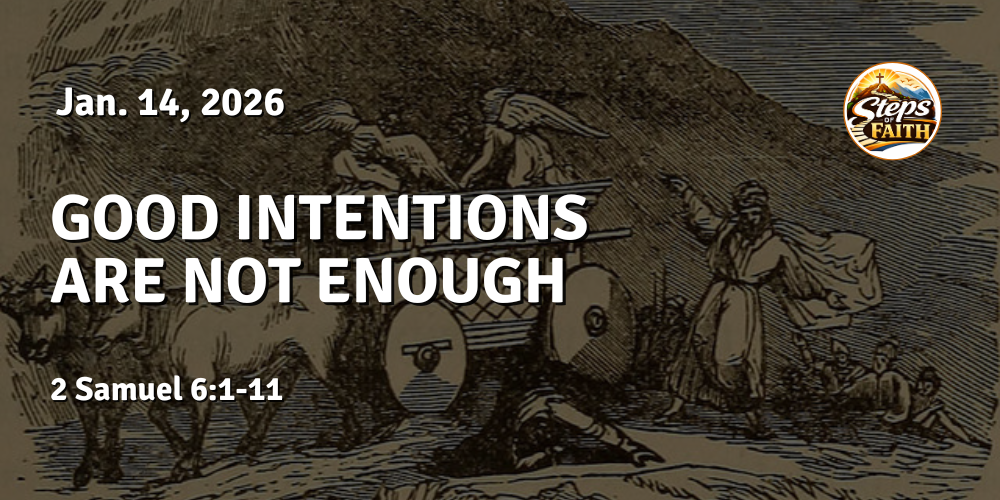
WHEN FAILURE AND OPPOSITION WEIGH US DOWN
Base Text: Numbers 11:10–24
“If this is how you treat me, please kill me at once, if I have found favor in your eyes, and do not let me see my misery.” (Numbers 11:15)
There are moments in the journey when the weight becomes too heavy to carry in silence. The heart, once firm, begins to give way. The mind, once clear, becomes confused. Numbers 11 presents Moses exactly in this place: the place of extreme exhaustion.
Moses was not just any leader. He was chosen by God, empowered with signs, miracles, and spiritual authority. Even so, he came to desire his own death. This teaches us an essential truth: neither spiritual maturity nor divine calling exempts us from emotional fatigue.
The pressure Moses faced did not come from an external enemy, but from the very people he loved and led. Constant complaining, comparisons with the past, endless grievances, and ingratitude wore down his soul little by little. The problem was not a single event, but a silent accumulation of weight—until he could bear it no longer.
Moses’ cry in verse 15 is neither theatrical nor exaggerated. The text shows that he speaks with conviction. This is not a passing moment of sadness, but the cry of someone who has reached the limit. He feels alone, responsible for something he knows he cannot solve, carrying a burden that was never meant for one man to bear alone.
The people’s murmuring produced exhaustion in the leader. And this still happens today. People burn out not only from work, but from constant pressure, daily opposition, unrealistic expectations, and failures that seem to pile up without relief. When all of this accumulates, the heart can begin to believe that ceasing to exist would be easier than continuing to fight.
But death never solves the problem. It only transfers the pain. If Moses had died, the people would have continued to complain, the wilderness would have remained the same, and the consequences would have spread to many innocent lives. What Moses truly needed was not death, but relief, direction, and divine help.
What saved Moses was not his strength, nor his experience, nor even his position. It was his honesty before God. He did not pretend to be fine. He did not spiritualize his pain. He poured out his heart. He acknowledged his inability. He admitted that he could not go on alone.
And it was precisely there that God stepped in.
From verse 16 onward, the Lord responds—not with rebuke, but with direction. God does not minimize Moses’ pain; He offers a solution. Counsel. A path. Shared relief. God shows that Moses did not need to carry everything alone—and never did.
When opposition rises, when failure weighs heavily, when the soul feels exhausted, the path remains the same: draw near to God with sincerity. Do not wait until you have strength to pray—pray to receive strength. Do not wait for clarity to seek the Word—seek the Word to find clarity. God knows exactly the source of your pain and knows how to lead you out of it. The Lord’s counsel, when heard and practiced, is still able today to interrupt cycles of exhaustion, murmuring, and despair.
When the weight of the journey makes us want to stop,
God calls us to share the burden and to listen to His voice.
Calvary Baptist Church of Flemington, NJ
Written by Eliakim Aquino